Wednesday, February 6, 2013

Sightseeing Highlight: Blarney Castle


Blarney Castle is a medieval stronghold in Blarney,  near Cork and the River Martin. The building  originally dates from before AD 1200, when a wooden structure was built  on the site. Around 1210 A.D. this was replaced by a stone  fortification. It was destroyed in 1446, but subsequently rebuilt by Cormac MacCarthy -  then King of Munster. The castle was besieged during the Irish Confederate Wars and was seized in 1646 by Parliamentarian  forces under Lord Broghill. However, after the restoration the  castle was restored to Donough MacCarty, who was made 1st Earl of Clancarty. During the Williamite War in Ireland in the 1690s, the then 4th Earl of Clancarty was  captured and his lands (including Blarney Castle) were confiscated by the Williamites. The castle was sold and changed hands a number of times before being  purchased by Sir James St. John Jefferyes. Members of the Jefferyes family would later build a mansion near the keep. This house was destroyed by fire however, and in 1874 a replacement baronial mansion - known as Blarney House - was built  overlooking the nearby lake.
The castle is now a partial ruin with some accessible rooms and  battlements. At the top of the castle lies the Stone of Eloquence, better known as the Blarney Stone. Tourists visiting Blarney Castle may hang upside-down over a sheer drop to kiss the stone, which is said to give the gift of eloquence. There are many legends as to the origin of the stone, but some say that it was the Lia  Fáil - a magical stone upon which Irish kings were crowned. Surrounding the castle are extensive gardens. There are paths touring the grounds with signs pointing out the various attractions such as several natural rock formations which have been given fanciful names, such as Druid's Circle, Witch's Cave  and the Wishing Steps. Blarney House, also open to the public, is a Scottish  baronial-style mansion that was built on the grounds in 1874. (The pictures are from the official website of Blarney Castle)

Monday, January 14, 2013

Monasterboice or Mainistir Bhuithe

The historic ruins of Monasterboice, or Mainistir Bhuithe in Irish, are of an early Christian settlement in Couty Louth in northern Ireland. It was founded in the late 5th century by Saint Buithe who died around 521. It was an important center of religion and learning until 1142.
The site houses two churches built in the 14th century or later and an earlier round town. However, it is most famous for its 10th century high crosses. Muiredach's High Cross is regarded as the finest high cross in the whole of Ireland. It is named after an abbot, Muiredach mac Domhnaill, who died in 923 and features biblical carvings of both the Old and New Testaments. It has been described as the most beautiful specimen of Celtic stonework now in existence and the crosses at Monasterboice have been stated to be Ireland's greatest contribution to European sculpture. 

Wednesday, January 2, 2013

Donaghadee: the Light of the Northern Coast


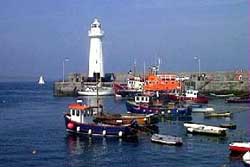
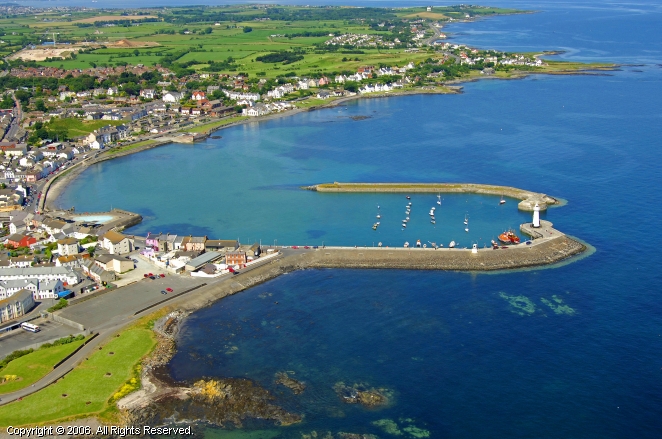
Donaghadee is a growing town on the northern coast of County Down, six miles from the historic town of Bangor and approximately 20 miles east of Belfast. It lies on the northeast coast of the Ards Peninsula. With a population of about 8,000 inhabitants, Donaghadee is the closest point to Scotland, so close in fact, that the Scottish coast is visible to the naked eye on clear days. The town offers a rich history, having been one of the main ports of entry to the island of Ireland until the 19th Century. It is probably best known for its lighthouse and harbour, which has been a haven for ships for centuries. The harbour has been there since at least the 17th century. Aside from the historical buildings reflecting its rich heritage, the town has a picturesque seafront and a wide range of cafes and restaurants. Among these is Grace Neill's, which opened in 1611 as the 'King's Arms' and claims to be the oldest pub on the island of Ireland, a record officially held by Sean's Bar in the Republic of Ireland.

The other reason Donaghadee may be famous is because of the Donaghadee Male Voice Choir. It was founded in 1932 and began as a small local chorus performing in churches and other local functions. Since then, the Choir has developed and flourished and today is an internationally known Choir having performed on stage, radio and television in the USA and Canada, among other international locations. With a membership of around 70 and a repertoire which embraces both secular and sacred music and ranges from folk and traditional songs to choral favorites and operativ works, it is something not to be missed while visiting Ireland. 

Wednesday, December 12, 2012

Belfast - capital of Northern Ireland

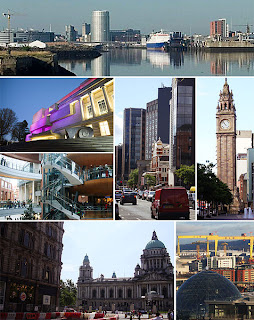
Belfast (from Irish: Béal Feirste, meaning "mouth of the shoal") is the capital of and largest city in Northern Ireland. By population, it is the fourteenth largest city in the United Kingdom and second largest on the island of Ireland. It is the seat of the devolved government and legislative Northern Ireland Assembly.  Belfast was granted city status in 1888. Historically, Belfast has been a centre for the Irish linen industry (earning the nickname "Linenopolis"), tobacco production, rope-making and shipbuilding: the city's main shipbuilders, Harland and Wolff, which built the well-known RMS Titanic, propelled Belfast on to the global stage in the early 20th century as the biggest and most productive shipyard in the world. Belfast played a key role in the Industrial Revolution, establishing its place as a global industrial center until the latter half of the 20th century. Industrialization and the inward migration it brought made Belfast, if briefly, the biggest city in Ireland at the turn of the 20th century and the city's industrial and economic success was cited by Ulster unionist opponents of Home Rule as a reason why Ireland should shun devolution and later why Ulster in particular would fight to resist it. Today, Belfast remains a center for industry, as well as the arts, higher education and business, a legal center, and is the economic engine of Northern Ireland. The city suffered greatly during the period of conflict called the Troubles, but latterly has undergone a sustained period of calm, free from the intense political violence of former years, and substantial economic and commercial growth. Belfast city center has undergone considerable expansion and regeneration in recent years, notably around Victoria Square. Belfast is also a major seaport, with commercial and industrial docks dominating the Belfast Lough shoreline, including the famous Harland and Wolff shipyard. Belfast is a constituent city of the Dublin-Belfast corridor, which has a population of three million, or half the total population of the island of Ireland.

Wednesday, December 5, 2012

Waterford - Ireland's oldest tourist destination, founded by the vikings in 914AD.

Waterford is the oldest city in Ireland. A walled city of Viking origins, it retains much of it's medieval character together with the graceful buildings from its 18th century expansion.
Waterford is the home of Waterford Crystal, the world-famous hand-crafted, cut glass product. The Waterford Crystal Visitor Center is home to the largest collection of Waterford Crystal in the world and the guided tours offer access to all areas of traditional crystal production. Waterford Museum of Treasures comprises three magnificent museums chronicling over one thousand years of history. It is both a treasury of gold, bronze, silver, crystal and historical documents and a treasure trail that takes you through 1000 years of Ireland's oldest city. The Treasures of Viking Waterford in Reginald's Tower - the Chorister's Hall will open in 2012 and house the Medieval Treasures, and the recently renovated Georgian Bishop's Palace tells the story from 1700 to 1970.
The parameters of the 10th century settlement can be clearly identified in The Viking Triangle. Reginald's Tower is the oldest civic urban building in Ireland. The elegant Chamber of Commerce building, Christ Church Cathedral, the City Hall and the Bishop's Palace are prime examples of beautiful 18th century architecture.
Ecclesiastical landmarks include St. Patrick's Churches, Black Friars, St. Olave's Church and Greyfriars - .
The Church Of Ireland Christ Church Cathedral, and the Catholic Cathedral of the Most Holy Trinity were both designed by Waterford architect John Roberts (1714 - 1796).
The Edmund Rice International Heritage Center commemorates the founder of the Christian Brothers, Edmund Ignatius Rice.
The Granville Hotel was the home of the 18th century patriot, Thomas Francis Meagher before passing to the great transport entrepreneur, Carlo Bianconi.

Friday, November 16, 2012

Confirmed Venue: Theatre Royal, Waterford

The Greeley Chorale travelers will have the opportunity to perform in the Theatre Royal in Waterford on Sunday, June 2nd 2013. 
Located in Waterford city's historic quarter, the Theatre Royal is one of Waterford's longest running arts and entertainment venue. It is part of a row of iconic buildings such as the Bishops Palace, Christ Church Cathedral and the City Hall building. Together, they form an architecturally impressive and historic quarter.
 
The history of the Theatre Royal dates back 220 years to its beginnings in 1810. However, even before that a Playhouse and Assembly Rooms were established in the 1700's due to the rise in prosperity in the city. It was here that the first performances were held. From 1779 on, the development of the theatre can be traced alongside historic events both at home and abroad. Then, in the early 1800's, the Playhouse was upgraded in the west wing of the City Hall building. The 20th century brought the introduction of cinematograph performances.
Photos courtesy of Theatre Royal website.

Wednesday, November 7, 2012

Confirmed venue: Ulster Hall, Belfast

On Saturday, June 1st 2013, the Greeley Chorale will perform a joint concert with the Donaghadee Male Voice Choir in Ulster Hall, Belfast. 

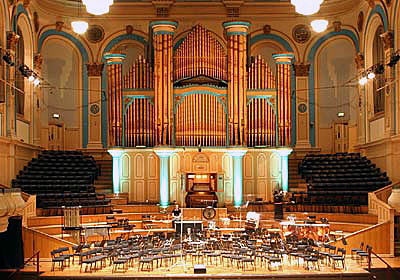
Ulster Hall was built in 1859 and opened in 1862. It was openend to provide the expanding city of Belfast with a larger multi-purpose venue. Even though larger concert halls have been opened in the city since then, Ulster Hall has remained a popular venue.
Belfast Corporation bought the building in 1902 and the Hall has been host to famous figures from the beginning: from Jenny Lind and Caruso to Charles Dickens and John McCormack, from Lord Carson and the Dalai Lama to Barry McGuigan and the Rolling Stones.
During World War II, the Ulster Hall was used extensively as a dance hall in order to provide entertainment for the American troops stationed in Northern Ireland. A shipment of American white oak planking later mysteriously arrived in Belfast to refurbish the dance floor.  
Moreover, the Mulholland Grand Organ in the Ulster Hall is one of the oldest examples of a functioning classic English pipe organ. 

Tuesday, October 30, 2012

Helpful Tips: Map of Ireland

 
Dear Greeley Chorale travelers, 
In preparation for your upcoming journey to Ireland, here a few links to helpful information:

The Official Tourism Ireland Website

Maps and Brochures of Ireland

Explore Ireland through videos


Monday, October 22, 2012

Discover Belfast with Incantato Tours

Even though Northern Ireland's capital is a smaller city of around 300,000 inhabitants, it has a unique history and a rich culture. Trace Belfast's 300-year history back to its humble origins and explore the original 1660s street layout or remarkable examples of Victorian architecture found in buildings such as the City Hall or Albert Clock Memorial. 
Some other notable events throughout the city's long history include:


  • The invention of air conditioning by Belfast's Sirocco Works in the scope of which the Royal Victorian Hospital became the first building in the world to be fitted with AC.
  • Belfast-educated Sir Hans Sloane, who was responsible for first creating milk chocolate. 
  • William Drennan, who first coined the expression 'Emerald Isle' in 1796.
  • The discovery of carbon dioxide by Joseph Black, son of a Belfast wine merchant, whose principles were used by James Watt to develop the steam engine. 

Once home to the Irish linen industry, tobacco production, and rope making, Belfast also became the site of ship building after locals developed a boat building trade at the mouth of the Lagan river. It is no surprise, then, that one of Belfast's most famous affiliations is to the Titanic, the concept for which was developed in Belfast in the early 1900s. Now the world's largest visitor experience, the Titanic Museum is located next to the historic site of the Titanic's construction and tells the story from her conception, through her construction and launch, to her famous maiden voyage and tragic end.


Thursday, October 11, 2012

The Gathering 2013 - Discover Ireland with Incantato Tours

If you want to find out the inspiration behind U2, James Joyce and Riverdance, and connect with the Land of Saints and Scholars, you are invited to join The Gathering. An unprecedented event for the Irish and the Irish at heart, The Gathering 2013 is a yearlong celebration of the wonders of Ireland in a long lineup of festivities, bringing Ireland's culture, music, arts, sports, and heritage fully to life. Whether you are Irish in ancestry or in spirit or have a curiosity about Ireland's history and people, 2103 is a great time to be visiting the Emerald Isle. Everyone is invited to experience the home of so many stories and songs as the people of Ireland will be the focus of the events in their communities, towns, and villages. Enjoy traditional Irish food, kiss the the Blarney stone, have a go at hurling, sample Atlantic seafood in Galway, or feel the wind ruffle your hair on the Cliffs of Moher. 
With over 70 million people worldwide claiming Irish ancestry, The Gathering provides an opportunity to visit Ireland and reconnect as communities throughout the country showcase and share their Irish culture and  traditions. The event begins on New Year's Eve in Dublin. Afterward, The Gathering is meant to be a people-led project as everyone is encouraged to create local gatherings of their own, inviting friends from around the world to come and see what The Gathering is all about. 

Tuesday, October 2, 2012

Northern Ireland: the Giant's Causeway

In 1986, UNESCO named Ireland's first World Heritage Site: the Giant's Causeway, a mysterious geological formation on the North-Eastern coast of Ireland. 
The site is an area of approximately 40,000 interlocking, hexagonal basalt columns that are neatly packed together and form a jagged headland which points towards Scotland. 
Visitors can walk along the columns as they form stepping stones that disappear downward into the sea. 
Science, myth and legend surround the Giant's Causway, the latter of which is the most colorful. It is said that the Causeway was the stomping ground of a giant who lived in the area two thousand years ago. Perhaps you may discover the chimney to one of his houses or the boot he left lying by the beach?
In the newly opened Visitor's Center you learn that, according to geologists, the site is believed to have been formed some 50-60 million years ago and is the result of an ancient volcanic eruption.
Often described as the Eighth Wonder of the World, the Giant's Causeway was documented as early as 1693 and realistic sketches of the site were published in 1740. 
Not far from the Giant's Causeway, you will also find the Carrick-a-rede Rope Bridge. Traditionally the bridge was erected by fishermen over a 75-foot deep and 66-foot wide chasm in order to check their salmon nets. 
Anyone brave enough to cross is sure to be rewarded with a fantastic view. 

Friday, September 14, 2012

Aran Islands - an Incantato Favorite

The Aran Islands lie just outside Galway Bay and not far from the Cliffs of Moher on the west coast of Ireland. The three islands, Inis Mor Island (Big Island), Inis Meain Island (Middle Island), and Inis Oirr Island (East Island) are famous for their geological formations, historical monuments and their linguistic and cultural heritage. 
Inis Mor is the largest of the three, comprising about 7,600 acres. Here, you can find several ancient stone forts and churches, one of the most impressive of which is Dun Aengus. This semicircular fort rests on the edge of a cliff and consists of an inner court surrounded by a wall 20 feet high and 16 feet thick at the base. 
There are about 1,100 inhabitants on Inis Mor, making it by far the most populated of the three islands. The main village and also main harbor is Kilronan. 
The middle island, Inis Meain, is said to be the most untouched of the islands. Here you can experience the natural, cultural and traditional way of life of the islanders. Inis Meain has about 200 inhabitants, 300 flowering plants, as well as a wide variety of nesting birds. Here, too, you will find ancient stone forts, one of the oldest of which is Dun Fearbha from the 4th century AD. It is an unusual structure as it is more square than circular like the rest of the forts on the islands. 
Inis Oirr, the east island, is also the smallest of the three with only 1,400 acres and 300 inhabitants. There is a large three-story castle dating back to around 1585, as well as several ruins of churches to be discovered here.

Friday, August 10, 2012

About Travel Insurance- Make sure you are protected

Incantato Tours strongly recommend getting travel insurance for your upcoming journey. Not only are you covered medically should anything happen when traveling, but with TravelGuard's policies, you also protect your investment should you have to cancel or interrupt the trip. Last not least, there is also coverage for delayed and lost luggage etc.
Here is a direct line to purchase travel insurance online and can you do so with your credit cards and also select the option that is best for you.


In the meantime, have a look at the most comprehensive coverage option The Protect Assist Gold below.

Protect Assist (Gold) -
Comprehensive Travel Protection for the World Traveler
  • Trip Cancellation
  • JUST ADDED! - Trip Cancellation due to employment loss or layoff
    if employed with the same employer 1 year or longer
  • Trip Interruption and Travel Delay
  • Emergency Medical and Emergency Medical Transportation
  • Baggage and Travel Document Protection
  • Baggage Delay and Lost Baggage Tracking
  • NEW - Cancel For Any Reason option now available
  • NEW - Cancel For Work Reasons option now available
  • NEW - Children age 17 and under covered at no additional cost
  • IMPROVED -Trip Cancellation limit increased to $100,000 (from $15,000),
  • IMPROVED - Trip Interruption coverage increased to 150% of Trip Cost
  • IMPROVED - Travel Delay required hours reduced to 5 hours (from 12)

ProtectAssist special features:
  • Best coverage for Weather Related Cancellations
  • Pre-existing Condition Exclusion Waiver*
  • Default/Bankruptcy Protection*
  • $50,000 Flight Accident Insurance*
  • 24-Hour "LiveTravel" Travel Agency
  • Emergency Cash Transfers
  • Identity Theft Restoration

Comprehensive non-insurance travel services* automatically included with plan!With the ProtectAssist plan, every customer also has access to these valuable travel services when they travel:· Arrangements for last-minute flight changes· Hotel finder and reservations· Rental car reservations· Emergency medical assistance· BagTrak® -- lost baggage tracking· Pre-trip health and safety advisories· Live e-mail and phone messaging to family and friends· Cash transfers· Airport transportation· Golf course reservations· Event ticketing· Floral services· Identity Theft restorationBusiness Assistant* (available when Optional Cancel for Work Reasons coverage is purchased)


*Non-Insurance services are provided by AIG Travel Assist.


Eligibility
Citizenship: All Nationalities
Residency: United States
New York, Oregon, and Washington residence please call to purchase
Some rider options are not available and other restrictions may apply

Destination: Worldwide
Ages: All Ages
Max Trip Length: 365 Days

Thursday, August 9, 2012

Intriguing Ireland – a first itinerary for the 2013 Greeley Chorale performance tour


Here is a first itinerary for the upcoming journey:

Day 1, Wednesday, May 29, 2013
Overnight flight to Ireland

Day 2, Thursday, May 30
Arrive Dublin Airport – Transfer to Belfast
After meeting your Incantato Tour Manager and driver at Dublin airport, your group continues by deluxe coach to Belfast – the heart of Northern Ireland. Enjoy and orientation tour and Irish food at the pub welcome dinner.


Day 3, Friday, May 31
Causeway Coast
The Giant’s Causeway is Ireland’s only World Heritage Site and there is so much to see when visiting this stretch of the North Antrim coast: sandy bays, craggy headlands and dramatic ruins. The really brave among you may want to take a walk on Carrick-a-rede Rope Bridge during this full day excursion with a traditional lunch in the fishing village of Ballintoy. Afternoon return to Belfast or stop in Donaghadee to meet with the Men’s Choir.

Day 4, Saturday, June 1
Belfast sightseeing and first concert
Travel back in time as you learn more about Belfast’s rich and turbulent history. You will see the Titanic Quarter and Museum, Queens University, the Botanic Gardens, as well as the famous Wall Murals in the Falls and Shankill areas. The afternoon is at leisure for individual exploring or to relax. Evening concert at a prime Belfast venue, possibly joined by the Donaghadee Men’s Choir.

Day 5, Sunday, June 2
Via Monasterboice to Waterford
Bid farewell to Northern Ireland as you travel to Waterford. En-route, stop at the ruins of Monasterboice (Irish: Mainistir Bhuithe), an early Christian settlement founded in the late 5th century and important center of religion and learning. The site is most famous for its 10th century high crosses regarded as the finest in the whole of Ireland: the crosses feature biblical carvings of both the Old and New Testaments of the Bible.

Day 6, Monday, June 3
Waterford Walking Tour and Concert
Embark on a tour of Ireland’s oldest city: Waterford. Present your next concert alone or with a local choir in one of the two beautiful venues.

Day 7, Tuesday, June 4
Leisure Day in Waterford
There is a lot to see and do in this welcoming water-front city. Your Incantato Tour Manager and coach are at the Greeley group’s disposal for activities in town or nearby. And the Waterford Crystal attraction is open, too!

Day 8, Wednesday, June 5
Scenic route to Killarney with stops
Experience the magnificent countryside and stunning grounds of Blarney Castle as you make your way further south to Killarney with stops en-route. Orientation tour upon arrival. May we recommend a horse drawn carriage ride through Muckross Gardens?

Day 9, Thursday, June 6
“Ring of Kerry” – Pub Concert
Encircling the Iveragh Peninsula, the “Ring of Kerry” is a must-do excursion. The captivating mountain and coastal scenery is dotted with slate-roofed fishing villages. Have fun at a private sheep herding demo. Upon return to Killarney, prepare for a fun music pub concert and dinner.

Day 10, Friday, June 7
Adare – Glenstale Abbey – Dublin
Next stops en-route to Dublin are the historic village of Adare and Glenstal Abbey where you will hear the monks sing a Gregorian Chant. Afternoon arrival in the Irish capital city for an orientation tour followed by check-in and evening at leisure.

Day 11, Saturday, June 8
Dublin sightseeing – Lunchtime Concert
Your full-day tour of Ireland’s capital city includes Dublin’s famous Georgian Squares, St. Stephen’s Green, as well as Trinity College and the Book of Kells Exhibition. Your lunchtime concert at St. Patrick’s Cathedral is confirmed. A fun farewell show dinner concludes the day.

Day 12, Sunday, June 9
Return flight home or continue on extension tour
Depending on your schedule, part of the group will be boarding the transfer to Dublin airport for the first set of return flights home. The remaining part of the group may embark on the optional extension tour which includes trips to Galway and the Aran Islands, as well as more time in Dublin. 

Lunchtime concert at St. Patrick's Cathedral is confirmed for Saturday, June 8


What better way to end the Greeley Chorale's 2013 Performance Tour than with a lunchtime recital at the beautiful St. Patrick's Cathedral in Dublin, the largest church in Ireland, on Saturday, June 8th?
Built in honour of Ireland’s patron saint, Saint Patrick’s Cathedral stands adjacent to the famous well where tradition has it Saint Patrick baptized converts on his visit to Dublin. A church was built on this site in 1191 and in 1991 they celebrated 800 years of worship. The present building dates from 1220 and throuhout the years it has been extended again and again.
Today, the Cathedral is the National Cathedral for the Church of Ireland (Anglican). The basis of the present building was built between 1191 and 1270, though little now remains of the earliest work beyond the Baptistry. Much of the work was overseen by Henry of London, a friend of the King of England and signatory of the Magna Carta, who wa
s also involved in the construction of Dublin's city walls and Dublin Castle. The tower (Minot's Tower) and west nave were rebuilt between 1362 and 1370, following a fire. In 1560, one of Dublin's first public clocks was erected in "St. Patrick's Steeple".
Throughout its long history the cathedral has contributed much to Irish life, and one key aspect of this relates to the writer and satirist Jonathan Swift, author of Gulliver's Travels, who was Dean of the cathedral from 1713 to 1745. Swift took a great interest in the building, its services and music and in what would now be called social welfare, funding an almshouse for poor women and Saint Patrick's Hospital.
The Choir School, which was founded in 1432, supplied many of its members to take part in the very first performance of Handel's Messiah in 1742. It continues and although originally all-male, now also admits girls; a Cathedral Girls' Choir was founded in 2000 and sings once or twice a week. The Organ of St. Patrick's Cathedral is one of the largest in Ireland with over 4,000 pipes. Parts of it date from a Renatus Harris instrument of 1695. It was restored in the 1890s and in 1963.

Wednesday, August 8, 2012

The Irish and their love for traditional food


When asked about Irish food, almost every response will include two things – Irish Stew and Corned Beef with Cabbage. And almost every visitor to Ireland is surprised to find that neither is featured all that commonly on restaurant menus!
In fact, corned beef is not traditionally Irish at all – but Bacon and Cabbage is. This is also true for Irish stew, which has been recognized as the national dish for at least two centuries. A poem from the early 1800s praised Irish stew for satisfying the hunger of anyone who ate it:
Then hurrah for an Irish Stew 
That will stick to your belly like glue.
That isn’t to say that such dishes are no longer eaten, they are, but they are homely dishes, served to family, rather than ones which would be chosen on an evening out. And so their appearance on a restaurant menu is a rarity.
Most traditional Irish foods use simple, basic and fresh ingredients. Many have been given a modern twist by a new generation of chefs or incorporated into dishes that better suit the tastes of a more widely travelled population.

Irish traditional cuisine is a peasant cuisine and food in a poor household is never wasted. There is nothing that illustrates this so well as the pig. Few ordinary Irish households in the past would have eaten beef – this was a food for the rich – but many kept a pig and it is said that they ate every part of it except for the grunt. Crubeens or pig trotters, tripe (pigs stomach) and drisheen (a blood sausage) were all popular dishes and are still eaten in parts of the country, notably Cork.
Irish people are still extremely fond of their fried breakfast, which always includes pork sausages, bacon rashers and black pudding (another type of blood sausage). In addition to that, breakfast is rather elaborate and typically includes orange juice, porridge, cereals, eggs, the traditional soda brown bread, toast, as well as tea.
 
When talking about Irish food, it is impossible to go without mentioning the potato. They are eaten boiled, mashed, fried, chipped and baked, mixed with cabbage or scallions to make colcannon or champ, made into potato cakes and used to top pies and thicken soups or stews. It’s common to find potatoes cooked two ways on the same dinner plate. It’s not all about dinner either. The food that Irish people miss most when they are overseas is Tayto, an Irish brand of potato crisps. Irish people are very fussy about their potatoes. Typically a supermarket will stock at least 5 or 6 different varieties, often many more, with the varieties changing depending on the season and each suited to a particular method of cooking.
Of all foods, the humble spud is certainly the most traditional. The Irish may not be dependent on them in the way they were in the past but there are a lot of Irish people for whom a dinner without potatoes is not a dinner at all.